Kitchen Lighting Done Right: Ambient, Task, and Accent Lighting

A well-designed kitchen uses three types of lighting:
- Task lighting under cabinets for work areas
- Ambient lighting for overall brightness
- Accent lighting to highlight design elements
The right mix makes your kitchen both beautiful and functional
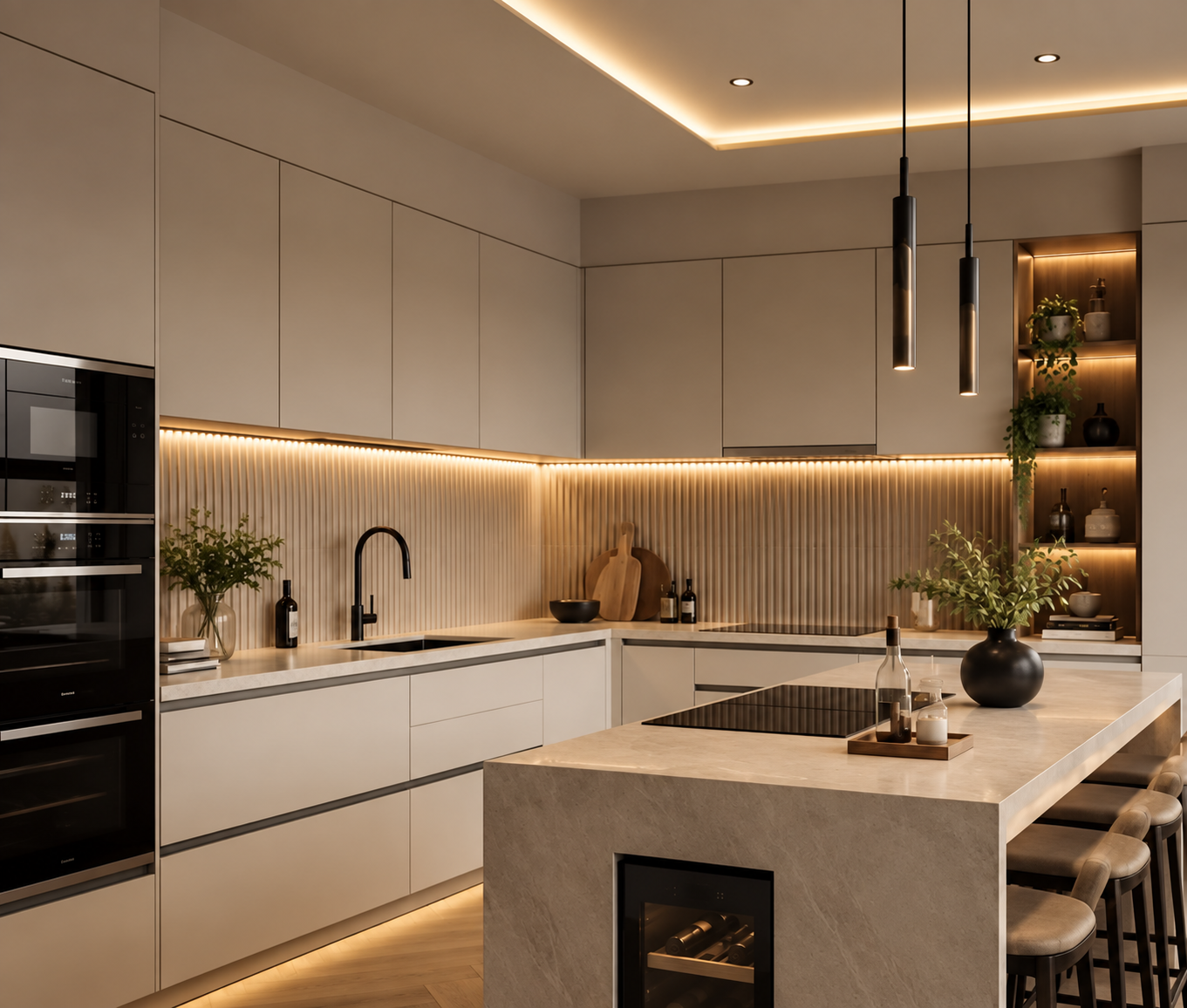
A successful kitchen needs layers of light—each serving a different purpose while creating a warm, welcoming atmosphere. Lighting is one of the most powerful elements of interior design. It enhances color, creates an atmosphere, highlights architectural details, and influences how a space feels from morning to night. Choosing the right lighting doesn’t just brighten a room-- it brings your entire design vision to life.
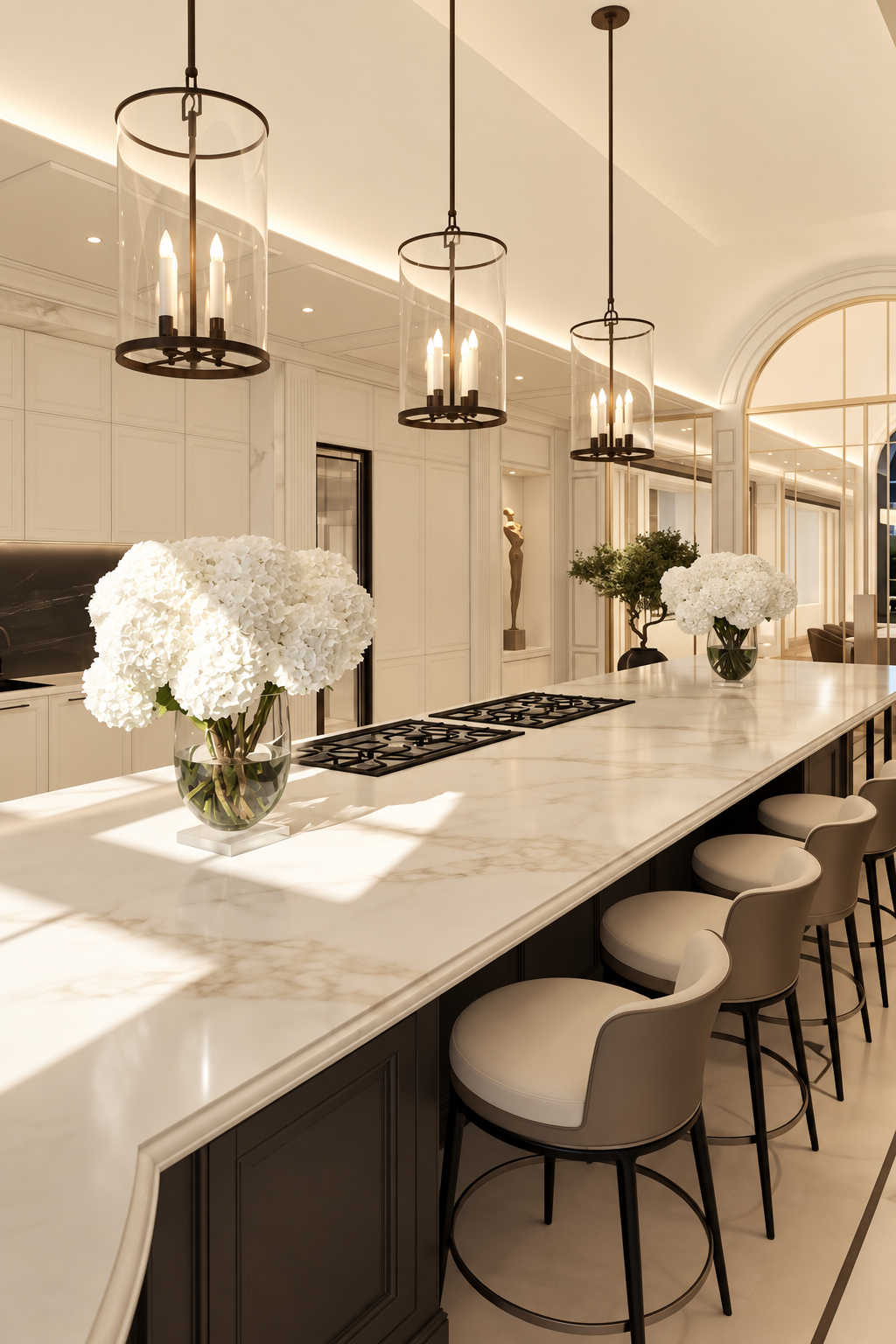
Ambient Lighting
Ambient lighting provides soft, general illumination across an entire room, creating a comfortable base layer of brightness without harsh glare. Pendants and chandeliers hang from the ceiling to serve as a room’s main focal point and base light layer. Recessed and flush mounts sit flat or inside the ceiling to offer clean even coverage without taking up visual space. Cove and LED strip lighting hide along ledges, under cabinets, or behind furniture for soft, indirect washes of light.
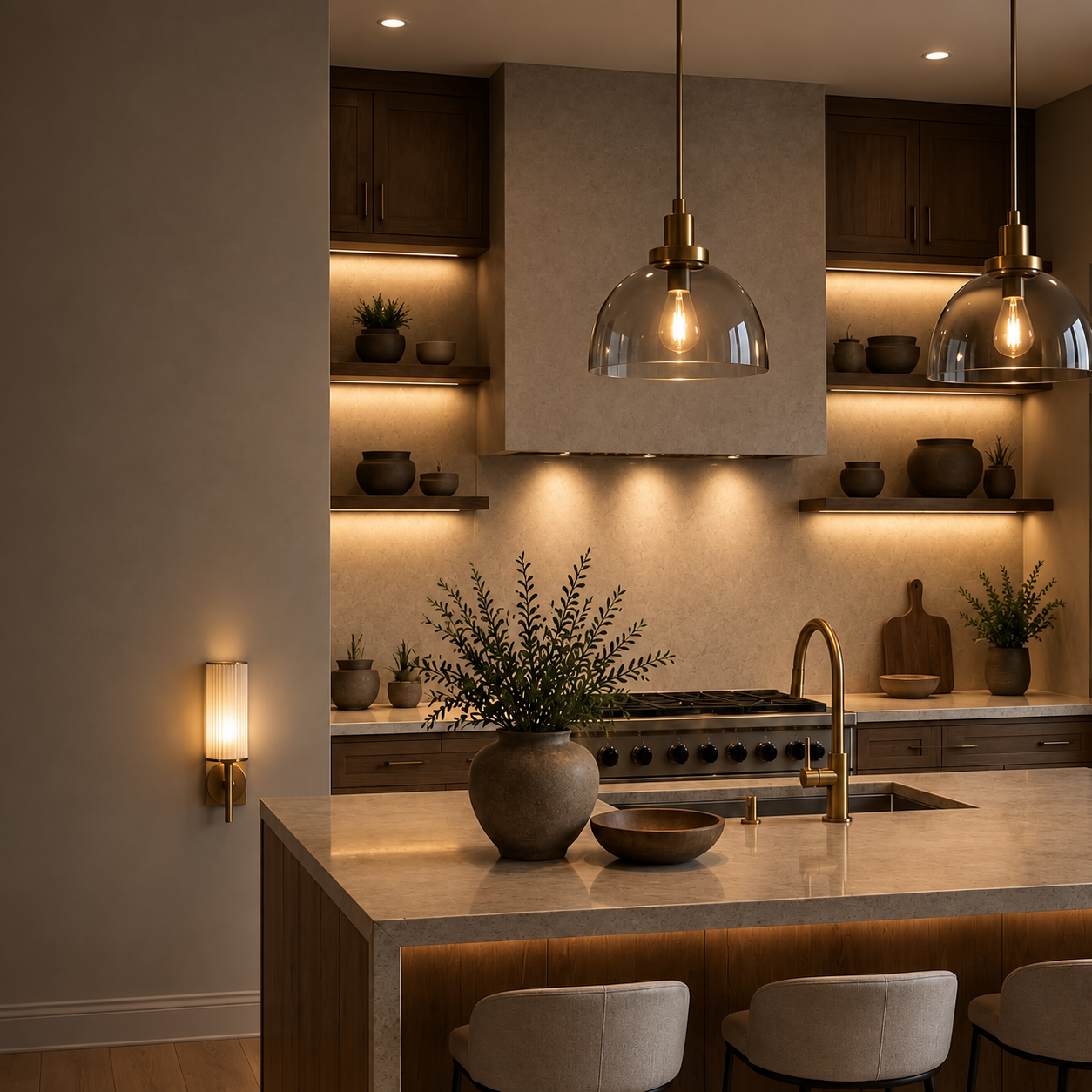
Task Lighting
Task lighting provides focused illumination to brighten detailed work areas for specific activities like meal prep, cooking, reading, or working to help reduce eye strain and improve clarity. Undercabinet lighting can also provide a calm mood after the meal is finished.
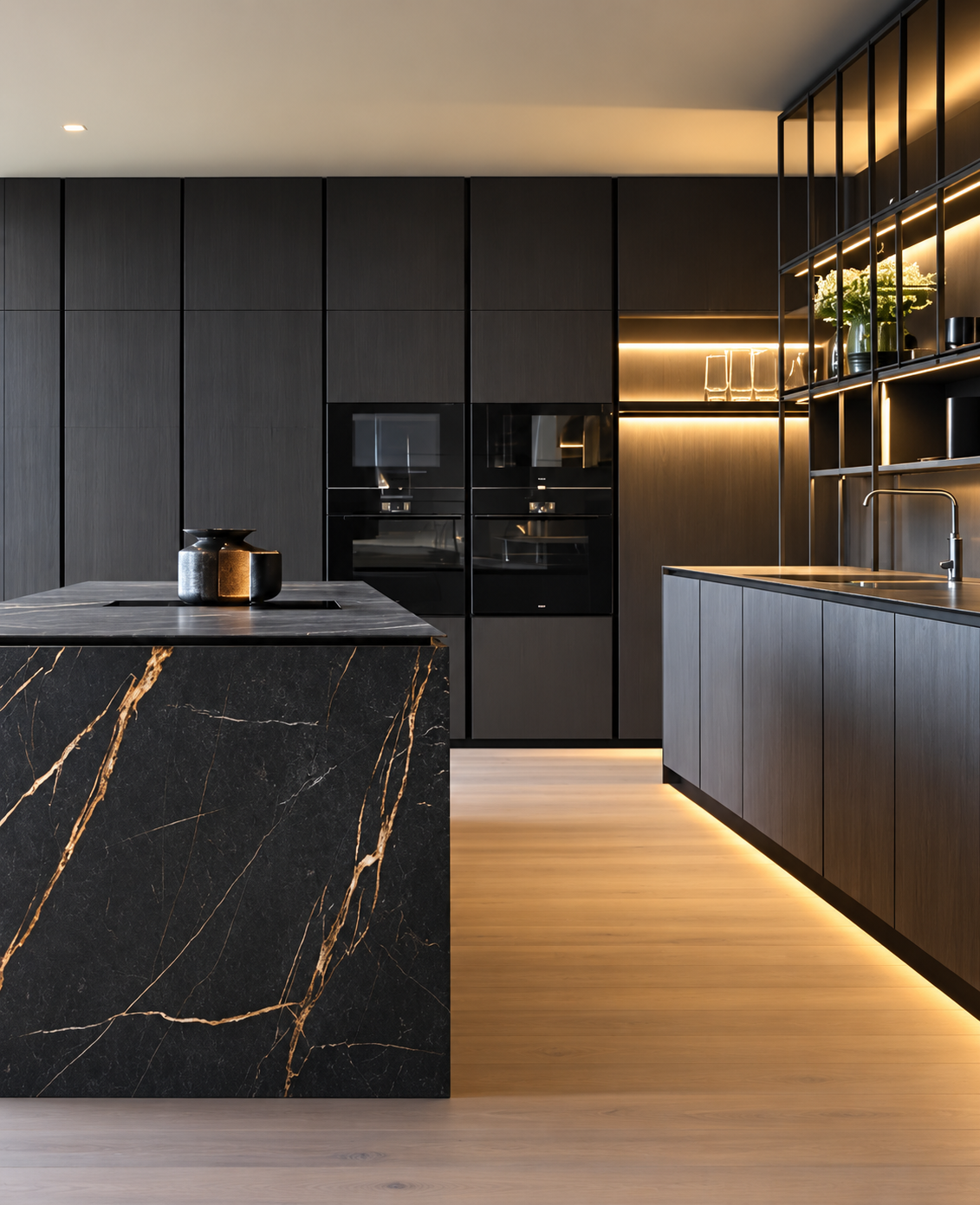
Accent Lighting
Accent lighting adds depth and highlights the kitchen’s most beautiful features—perhaps artwork, an architectural detail, open display shelving, or a striking stone backsplash.
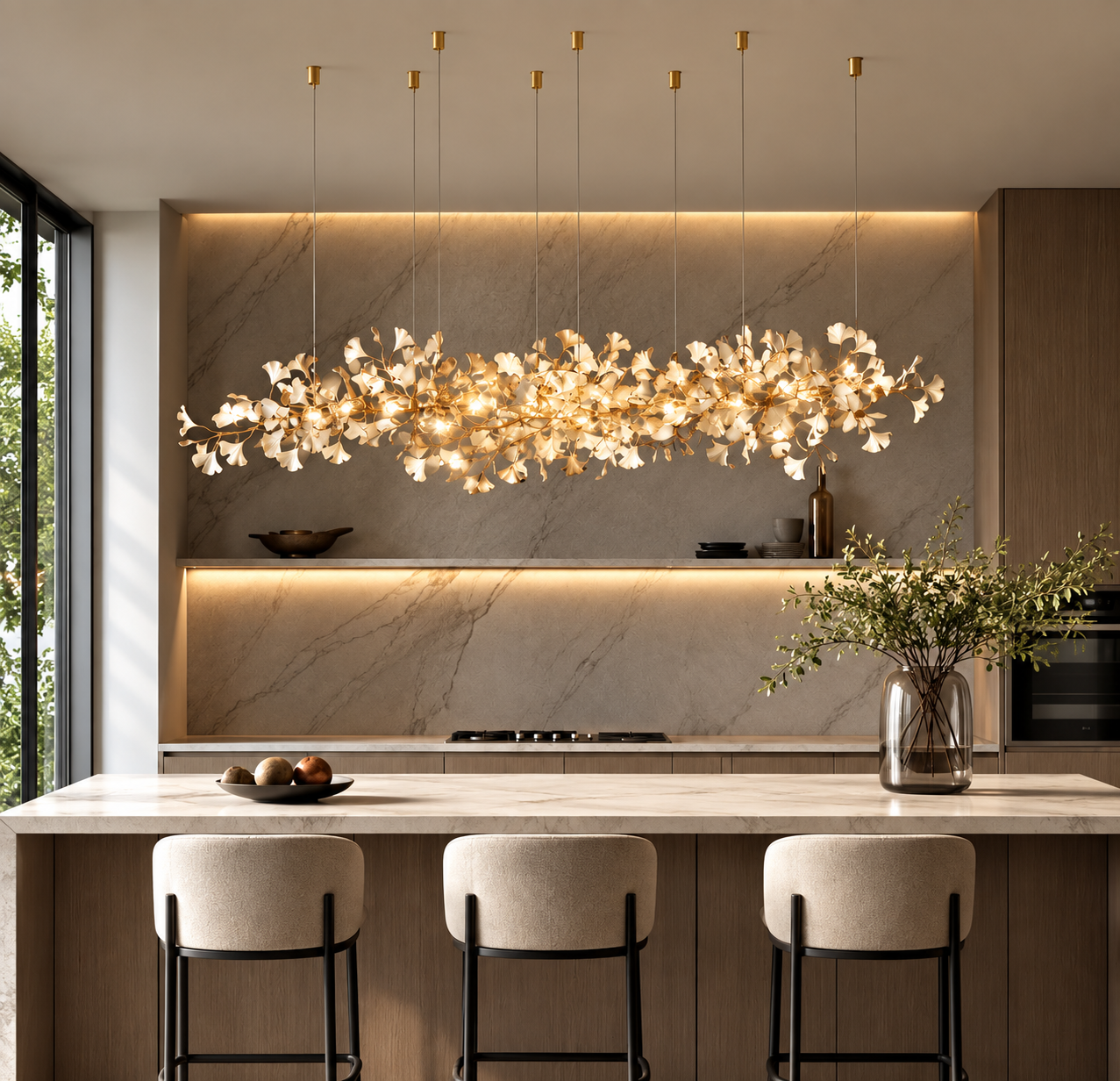
Decorative Lighting
Decorative lighting acts almost like the jewelry of the room. Pendants, chandeliers, and sculptural sconces bring personality, proportion, and a modern chic counterpoint to classic cabinetry.
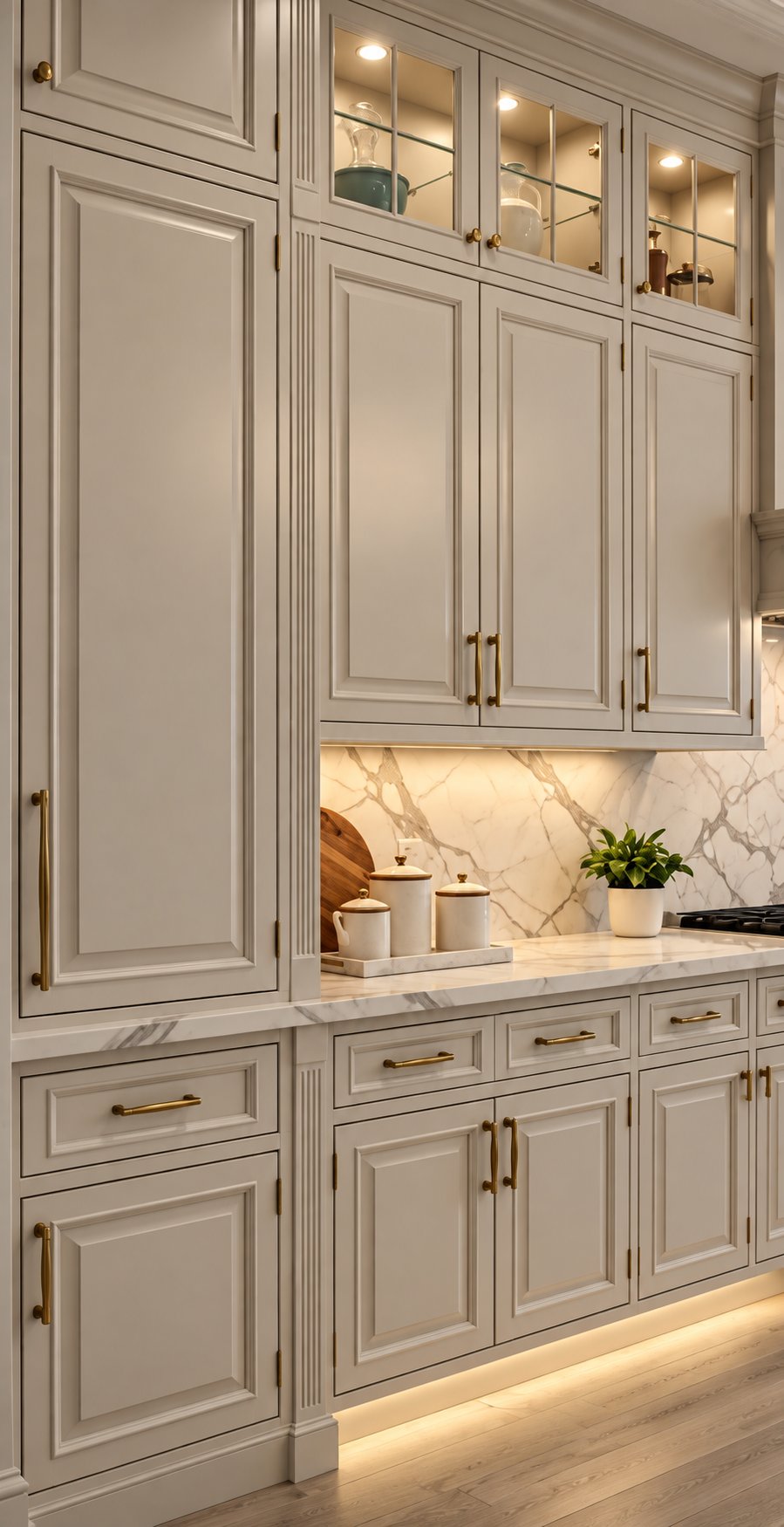
Interior Cabinet Lighting
Lighting the interior of cabinetry illuminates glass-front cabinets, open shelving, and display areas. This lighting gives the kitchen a refined glow in the evening and can provide an elegant backdrop for a client’s treasured collection.
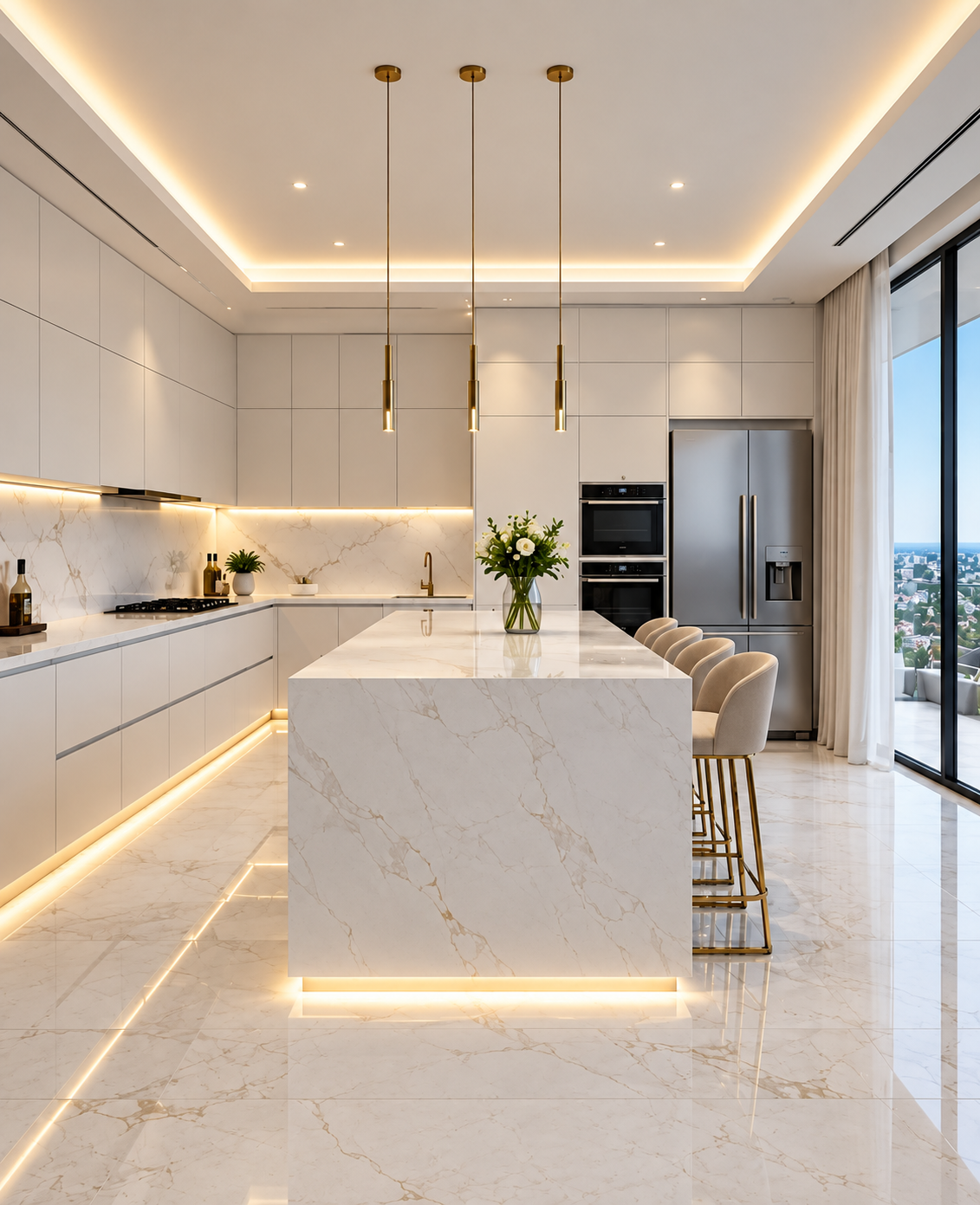
Combine ambient, task, and accent lighting for a balanced room design. The most successful kitchens combine these layers rather than relying on one source. Separate dimmers are especially important, allowing the room to shift effortlessly from bright to functional during meal preparation to soft and atmospheric for dining and entertaining. A thoughtful combination of these different types of lighting creates a kitchen that is both highly functional and beautifully inviting.
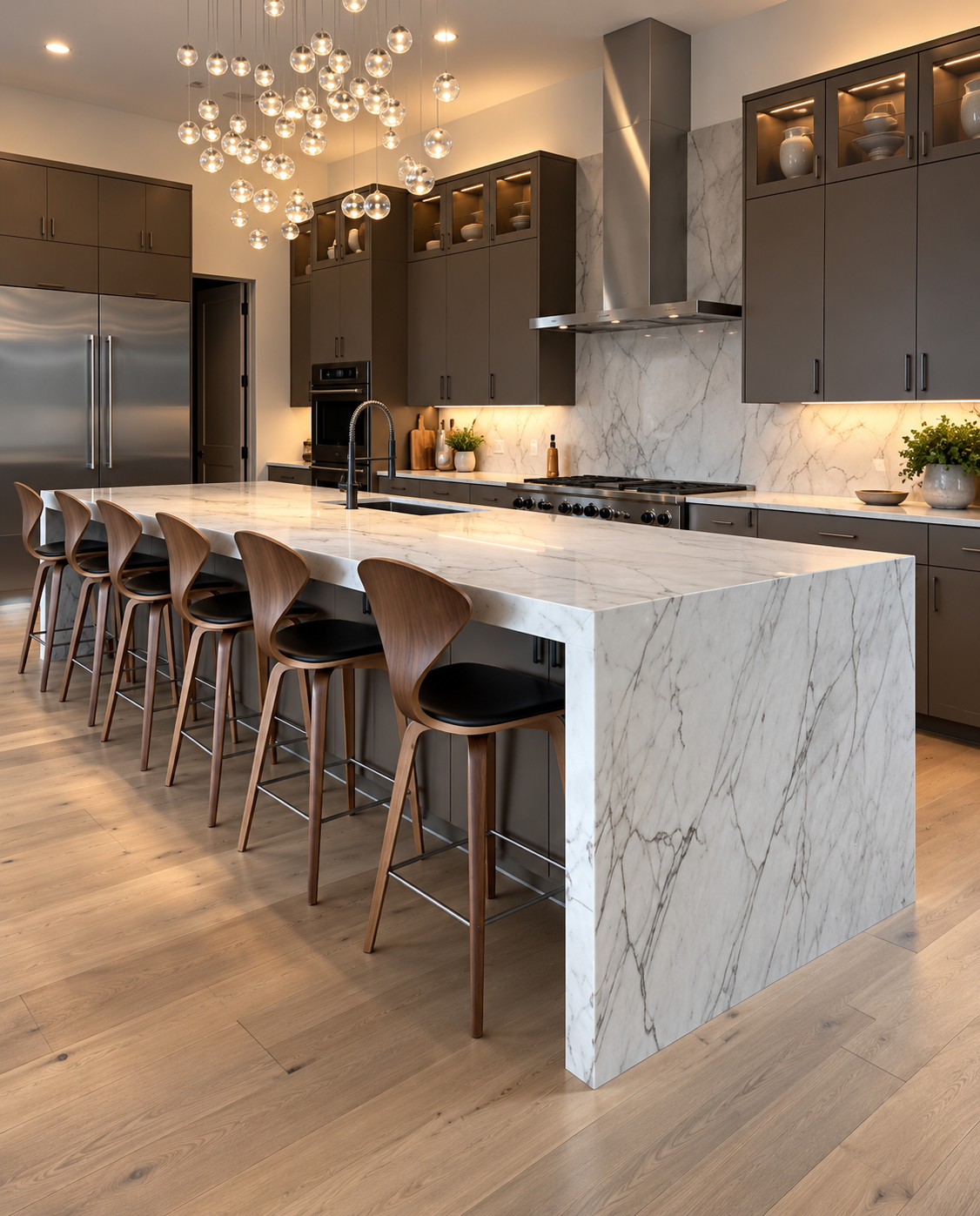
Ready to create a kitchen that feels as beautiful as it is functional? At Atchison Architectural Interiors, we design thoughtful lighting plans that enhance every detail, mood, and moment in your space. Explore our interior design services at https://www.jeanatchison.com/ or call (773) 404-5533 to start your project.